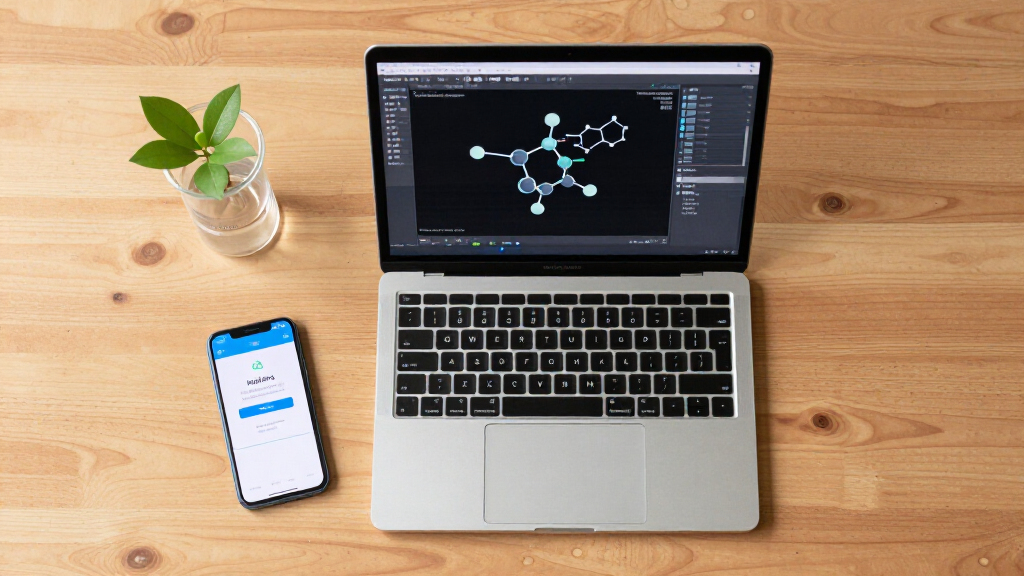

🔍 Read the full analysis: Exploring How Claude Is Advancing Biomolecular Modeling Through AI on ThorstenMeyerAI.com

Get business pricing on tech for your team
- Business-only prices and quantity discounts
- Tax-exempt purchasing
- Multiple users, one account, clear invoices
TL;DR
Anthropic claims that its Claude AI models are aiding biomolecular research by assisting with code, data interpretation, and literature review. These applications aim to accelerate scientific workflows, though independent verification is pending.
Anthropic has announced that its Claude AI models are being actively used by researchers in the field of biomolecular modeling, supporting tasks such as code generation, literature synthesis, and data interpretation. For more details, see the original analysis. The company describes these applications as tools that help speed up research workflows, though independent verification of these claims is not yet available.
According to Anthropic, researchers are deploying Claude in several key areas of biomolecular work, including generating and debugging scripts for molecular simulations, digesting large volumes of scientific literature, and structuring complex molecular data. The company emphasizes that Claude acts as an auxiliary tool, streamlining intermediate steps between hypothesis and discovery rather than replacing existing methods.
Anthropic highlights that biomolecular modeling is highly computationally demanding, involving expensive simulations and specialized software. AI assistants like Claude could reduce the time and effort required for tasks such as protein structure analysis, drug binding predictions, and data interpretation, potentially accelerating drug discovery, enzyme engineering, and basic biological research. Learn more about how AI is transforming biomolecular research in this detailed analysis.
However, the claims are based on Anthropic’s own account, with no independent peer-reviewed studies or detailed benchmarks provided at this stage. The extent of Claude’s impact, the accuracy of AI-generated code, and the scale of adoption among research labs remain unclear, as does how these applications compare to traditional workflows.
Potential Impact of AI on Biomolecular Research Efficiency
The reported use of Claude in biomolecular modeling signals a significant shift in how AI tools are integrated into scientific workflows. If validated, these applications could shorten research timelines, reduce manual effort, and lower barriers to complex data analysis. This is especially relevant in drug discovery and molecular biology, where computational bottlenecks often delay progress. The broader adoption of AI assistants like Claude could transform laboratory practices, making advanced data handling and coding support accessible to more researchers and institutions, thus speeding up innovation cycles.
As an affiliate, we earn on qualifying purchases.
Biomolecular Modeling and AI: Recent Developments
Biomolecular modeling has been revolutionized by machine learning breakthroughs, notably with AlphaFold’s success in predicting protein structures with near-experimental accuracy, earning the 2024 Nobel Prize in Chemistry. These advances established a new paradigm where AI handles the prediction phase, while scientists focus on experimental design and interpretation. Anthropic’s approach differs by positioning Claude as a general-purpose assistant that complements existing tools, focusing on workflow support tasks such as scripting, literature review, and data interpretation rather than structure prediction itself. This reflects a broader trend of AI augmenting laboratory work, beyond the initial breakthroughs in predictive accuracy.
“Using AI tools like Claude has helped us generate scripts more quickly and digest large amounts of literature, saving valuable time.”
— Researcher involved in biomolecular modeling
As an affiliate, we earn on qualifying purchases.
Verification and Broader Adoption of Claude’s Role
It remains unclear how extensively Claude is adopted across different research groups, as the claims are based solely on Anthropic’s own account without independent validation. No peer-reviewed studies or quantitative benchmarks have been published to substantiate the effectiveness or accuracy of Claude in these applications. The actual impact on research productivity, error rates in AI-generated code, and comparison with traditional workflows are still unknown. Further independent evidence is needed to confirm these claims and assess their generalizability.
As an affiliate, we earn on qualifying purchases.
Independent Validation and Industry Adoption Trends
Next steps include the publication of peer-reviewed studies or detailed case reports from research labs using Claude. Monitoring how pharmaceutical and biotech companies incorporate AI assistants into their workflows will also be indicative of real-world value. Future model updates from Anthropic may improve capabilities, but independent benchmarking and transparency will be essential to verify the claimed benefits. Researchers and industry stakeholders will likely watch for formal validation, broader adoption, and integration into existing scientific pipelines.
AI-assisted scientific literature review
As an affiliate, we earn on qualifying purchases.
As an affiliate, we earn on qualifying purchases.
Key Questions
How is Claude helping biomolecular researchers?
Claude is reportedly assisting with code generation, literature review, and data structuring to streamline workflows and reduce manual effort in complex molecular modeling tasks.
Are these claims independently verified?
No, the claims are based on Anthropic’s own account. Independent peer-reviewed validation or benchmarking data are not yet available.
What are the limitations of using Claude in research?
Potential limitations include the accuracy of AI-generated code, possible errors in data interpretation, and the lack of published quantitative evidence demonstrating efficiency gains or error reduction.
Will this change how biomolecular research is conducted?
If validated, AI tools like Claude could accelerate research timelines, make complex data analysis more accessible, and reduce manual workload, potentially transforming laboratory practices.
Primary source: Anthropic · via ThorstenMeyerAI.com
Halloween Picks
halloween
As an affiliate, we earn on qualifying purchases.