
TL;DR
JCDecaux shares have risen more than 70% this year, according to a MoneyWeek report that describes the outdoor advertising group as an unexpected beneficiary of the AI boom. The report points to advertisers’ spending shift and the company’s extensive real-world advertising estate, but provides no financial breakdown or evidence tying the share move directly to AI.
JCDecaux shares have risen more than 70% this year, as investors reassess the outdoor advertising company’s potential amid the global AI boom, according to a MoneyWeek report. The report attributes the company’s appeal to its extensive network of billboards and other real-world advertising assets and a shift in advertiser spending, but does not provide figures showing how much revenue or profit the trend has generated.

Get business pricing on tech for your team
- Business-only prices and quantity discounts
- Tax-exempt purchasing
- Multiple users, one account, clear invoices
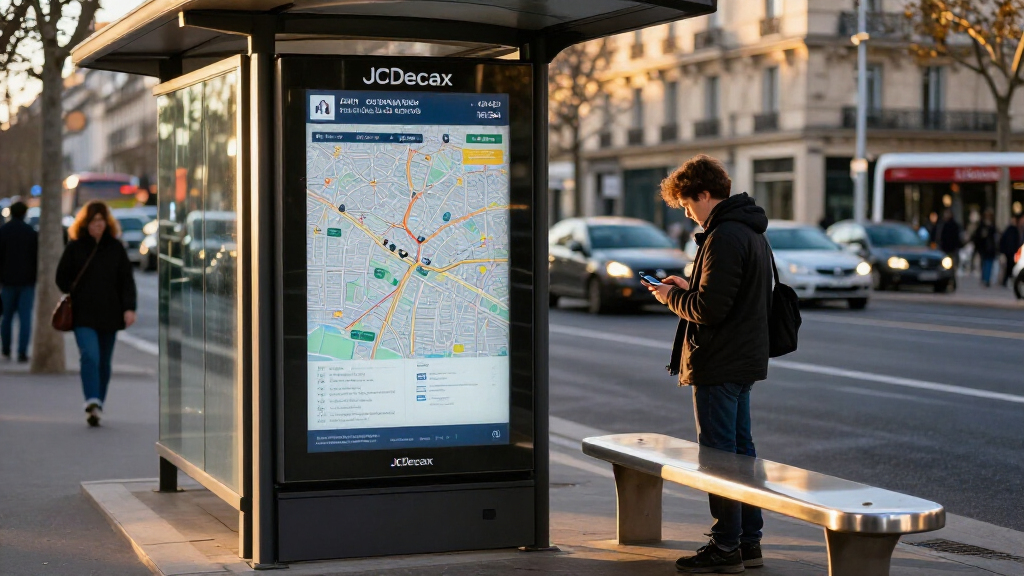
JCDecaux, listed in Paris under the ticker DEC, operates advertising assets including billboards in markets around the world. MoneyWeek describes the group as an unexpected beneficiary of AI-related investment and spending, arguing that physical advertising locations could gain value as advertisers reconsider where to place their budgets.
The report says the market has begun to recognize this potential and that the shares are up more than 70% this year. It does not identify a precise start date for the comparison, a closing share price, or a benchmark against which the rise should be measured. The figure is a reported share-price change, not evidence on its own of improved operating performance.
The provided account offers a broad explanation rather than a detailed financial analysis. It does not name specific AI products, advertising campaigns, contracts, or company announcements, and it does not disclose how much of JCDecaux’s business is directly connected to AI. The suggested connection between AI-era advertiser spending and the share rally should therefore be treated as an interpretation, not a company-confirmed cause.
Market narrative · Outdoor advertising · Reported this year
JCDecaux And The AI Boom: 4 Reasons The Company Stands Out
MoneyWeek calls JCDecaux an unexpected beneficiary of the AI boom. Its proposed link: advertisers may be shifting spend toward the company’s extensive real-world advertising estate. The share rally is reported; the financial payoff is not yet quantified.
The case, carefully framed
Four ways to read the story
The source supports a narrower case than its headline suggests. These four lenses separate the reported facts from the open questions.
Real-world reach
JCDecaux operates billboards and other advertising locations across markets. This footprint is the clearest company asset in the account.
Advertiser budgets
MoneyWeek says advertisers are shifting spend. It gives no customer data, campaign examples, or figures to measure that movement.
A market reappraisal
The report says investors have begun to recognize the potential. The reported share move does not establish what caused it.
Indirect exposure
The thesis links an AI-era spending story to physical advertising. JCDecaux is not described here as an AI developer or platform.
From outdoor ads to AI attention
The thesis has two different parts
Physical advertising assets are part of the business described. The AI-related benefit is an interpretation about how advertiser behavior could evolve.
MoneyWeek’s framing
“An unexpected winner”
The report argues that JCDecaux’s extensive real-world estate may gain value as advertisers reconsider where to place budgets. That could make the group part of a broader AI-linked advertising ecosystem.
What the account quantifies
One reported market figure; no breakdown of operating impact. The bars distinguish the reported share move from evidence that is not supplied.
Trace the claim
From AI narrative to company results
What remains unknown
How much AI drives the rally?
The available account offers a broad explanation, not a detailed financial analysis or a dated sequence of evidence.
No comparison window
No exact start date, closing price, share-price series, or market benchmark is provided.
No proven cause
The report does not establish what share of the rise, if any, is attributable to AI-related demand.
No operating breakdown
No figures show AI-linked revenue, profit, margins, cash flow, or material customer demand.
No cited confirmation
No company statement, executive comment, named contract, or upcoming milestone appears in the supplied text.
Investor watchlist
Company results will test the thesis
Look for evidence that changing advertiser behavior is translating into durable business performance.
What happens to advertising demand?
Disclosures on customer spending and demand could show whether budgets are moving toward physical placements.
Does revenue reflect the shift?
Revenue trends and outlook may help assess whether any change is material to JCDecaux’s results.
Can the business sustain the benefit?
Margins and cash flow would add context beyond a share-price move and a broad market narrative.
How is AI actually involved?
Clearer detail is needed on whether AI changes campaign planning, targeting, evaluation, or budget allocation.
Why Advertisers’ Physical Reach Matters
The report’s central point is that an AI-related investment story does not necessarily benefit only technology firms. JCDecaux owns physical advertising space, and MoneyWeek argues that this real-world footprint may be attractive as advertisers adjust their spending. If that spending shift is sustained, the company could be viewed as part of a broader advertising ecosystem linked to the AI boom, rather than as a direct AI developer.
That distinction matters to investors. The reported share-price rise of more than 70% may reflect expectations about future demand, but the available information does not establish that AI has already increased JCDecaux’s sales, margins, or cash flow. Readers should separate the market narrative from measurable company results: the report gives a proposed explanation for investor interest, not proof of a specific financial payoff.
The claim also highlights a potential tension in the story. AI may change how advertisers plan, target, or evaluate campaigns, while JCDecaux’s core assets remain billboards and other physical placements. Whether the company can translate changing advertiser behavior into durable revenue growth is not answered by the information available here.
Products Worth Considering

Apple AirPods Pro 3 Wireless Earbuds with Active Noise Cancellation

Bose QuietComfort Wireless Noise Cancelling Headphones – Twilight Blue Limited Edition

LG 27GR83Q-B 27-inch Ultragear QHD IPS Gaming Monitor
As an affiliate, we earn on qualifying purchases.
From Outdoor Ads to AI Attention
JCDecaux is an outdoor advertising company whose assets include billboards and other advertising locations. The underlying business described in the report is not presented as an AI platform or as a developer of AI systems. Its connection to the current boom is instead framed through its role in the places where advertisers can reach audiences.
MoneyWeek’s account describes two linked developments: a claimed shift in advertiser spending and growing market interest in JCDecaux’s physical estate. It says the market has woken up to the possibility that the company could benefit, alongside a rise of more than 70% in its shares this year. The account does not provide a dated sequence of announcements or financial results that would establish when investors began making that connection.
The report’s headline promises four reasons the company stands out, but the supplied text does not set out four separately evidenced factors. It supports a narrower account: JCDecaux has extensive real-world advertising assets, advertisers are said to be shifting spending, and the shares have climbed sharply this year. Further detail would be needed to verify additional reasons or quantify their effect.
“JCDecaux has become an unexpected winner of the global AI boom.”
— MoneyWeek report
How Much AI Drives the Rally
The available account does not establish how much of the share rise is attributable to AI, or whether the rise has been driven by other company or market factors. It gives no comparison with the wider market, no exact measurement dates, and no share-price series to clarify the reported increase of more than 70% this year.
It is also unclear what evidence supports the stated advertiser spending shift. The report provides no customer data, contract announcements, campaign examples, or revenue breakdowns showing that AI-related advertising demand has increased JCDecaux’s business. No company statement or executive comment appears in the supplied material.
The report does not specify which four factors underpin its headline claim. On the details available, the company’s physical estate and the reported movement in advertiser spending are the main points identified. The scale, duration, and financial impact of the opportunity remain unconfirmed.
Company Results Will Test the Thesis
The next substantive evidence would come from JCDecaux’s disclosures on advertising demand and financial performance, including any reported changes in revenue, customer spending, or outlook. Those results could help show whether the market’s interest is accompanied by stronger business performance, although the supplied report does not give a date for such disclosures or identify a specific upcoming milestone.
Investors will also need clearer information about the relationship between AI and outdoor advertising: whether advertisers are directing more budget to physical placements, how JCDecaux is responding, and whether any such change is material to its results. Until the company or detailed reporting provides that evidence, the AI connection remains a market interpretation around the share-price move.
For now, the confirmed points in the report are limited: JCDecaux operates a large real-world advertising estate, its shares have reportedly risen more than 70% this year, and MoneyWeek links investor interest to AI and a shift in advertiser spending. The size and staying power of any AI-related benefit are still unknown.
Source: rss
Key Questions
What is the reported development involving JCDecaux?
MoneyWeek reports that JCDecaux shares have risen more than 70% this year as investors consider whether the outdoor advertising group could benefit from advertiser spending shifts linked to the AI boom.
Is JCDecaux an AI company?
The supplied account describes JCDecaux as an outdoor advertising company with billboards and other physical advertising assets. It does not describe the company as an AI developer.
What is the proposed link between AI and JCDecaux?
MoneyWeek argues that the company’s real-world advertising estate could benefit from a shift in advertiser spending amid the AI boom. The account does not provide data to quantify the shift or its effect on JCDecaux’s business.
Does the report prove AI caused the share-price rise?
No. The report presents AI-related advertiser demand as an explanation for market interest, but gives no analysis establishing that it caused the reported rise of more than 70%. The precise measurement period and other contributing factors are not supplied.
Source: rss