

TL;DR
Thorsten Meyer AI has compared 15 guides for building AI-powered workflows and ranked Mastering n8n in Practice as its best overall choice. The report favors focused, hands-on manuals over broad tool catalogs but does not provide independent testing data, pricing analysis or reader feedback for every selection.
Thorsten Meyer AI has ranked 15 guides to AI workflow automation, selecting Mastering n8n in Practice as the best overall resource for readers seeking hands-on instruction in APIs, artificial intelligence and business automation. The report matters because it separates resources for beginners, developers and regulated professions rather than treating the fast-expanding category as a single market.
The comparison divides the market into no-code instruction, code-first development and profession-specific playbooks. It says Mastering n8n in Practice led the field because its 20 projects move from concepts to working automations and include API and AI integrations. The report also warns that readers entirely new to APIs may encounter gaps.
For beginners, the source identifies Agentic AI Made Simple as a suitable route to working automations without code. It also lists Claude Code for Beginners Made Easy as a no-code path to building agents, while Agentic Coding with Claude Code (5-in-1) is positioned for developers who want broader project-lifecycle coverage. The source says the latter has no customer reviews or ratings available to support an independent quality judgment.
The specialist selections include AI for Solo Lawyers, 101 AI Workflows for Small Business, a research guide covering ChatGPT, Claude and Perplexity, and an ethical-hacking manual aimed at security professionals. A title centered on Google Gemma 4 is presented as the privacy-focused option for local model use. These are editorial recommendations from Thorsten Meyer AI, not findings from a controlled benchmark or a peer-reviewed study.
Focused Guides Beat Broad Catalogs
The report’s central finding is that technical starting point may matter as much as the software being taught. Readers without scripting experience are directed toward no-code resources, while developers are steered to code-first material. That distinction can affect whether a buyer finishes with a functioning workflow or only a broad understanding of available tools.
The comparison also finds that role-specific guidance may offer more value in fields governed by privacy, citation or authorization rules. Legal, research and security workflows carry constraints that general small-business manuals may not address. For organizations handling sensitive information, the report presents local AI deployment as an alternative to sending data through cloud services, though it does not measure the security or performance of the cited setup.
As an affiliate, we earn on qualifying purchases.
Automation Guides Split Into Camps
AI workflow resources once centered mainly on simple no-code connections between business applications. The selection described by Thorsten Meyer AI reflects a wider 2026 market spanning agent-building tools, coding assistants, API orchestration and locally hosted models. The report characterizes n8n as the category’s closest equivalent to a standard and notes that the platform anchors two of its 15 selections.
The comparison draws a recurring line between depth and breadth. Single-platform manuals can devote more space to implementation, troubleshooting and complete projects. Survey books such as 50 AI Tools That Replace Your Whole Workflow provide a map of the market but, according to the source, may not guide readers through building one complete automation.
“n8n is the closest thing this category has to a standard.”
— Thorsten Meyer AI comparison
As an affiliate, we earn on qualifying purchases.
Testing Evidence Remains Limited
It is not clear from the supplied material how all 15 guides were scored, whether every project was reproduced, or whether the comparison used a fixed testing rubric. The source gives editorial judgments and selected advantages and drawbacks, but it does not disclose quantitative results for completion time, reliability, maintenance burden or workflow accuracy.
The supplied source also does not include the full details for every ranked title. Prices, publication dates and customer-review totals are incomplete, and those figures can change. Claims about cost savings, privacy and productivity should be treated as author or publisher claims unless supported by separate testing. The practical status and capabilities of any named model or platform should also be checked at the time of purchase.
As an affiliate, we earn on qualifying purchases.
Buyers Must Match Skills First
Readers choosing among the selections will need to identify their technical skill level, data-handling requirements and desired outcome before buying. Beginners can compare no-code instruction, developers can examine project depth and API coverage, and regulated professionals can check whether a guide addresses their field’s rules. Future updates to the ranking will need to account for software changes, new editions, reader feedback and evidence that the published projects still work.
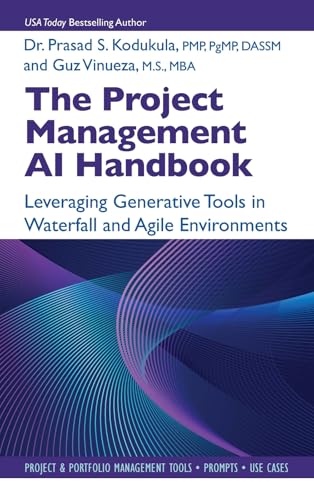
The Project Management AI Handbook: Leveraging Generative Tools in Waterfall and Agile Environments
As an affiliate, we earn on qualifying purchases.
As an affiliate, we earn on qualifying purchases.
Key Questions
What was ranked as the best overall AI workflow resource?
Mastering n8n in Practice received the top overall ranking. Thorsten Meyer AI cited its 20 hands-on projects and coverage of APIs and AI integrations.
Is this a ranking of AI tools or books about those tools?
It is mainly a comparison of books and practical guides about workflow tools, platforms and methods. It is not a direct performance benchmark of 15 software products.
Which options are aimed at people who cannot code?
The report recommends Agentic AI Made Simple for total beginners and also highlights Claude Code for Beginners Made Easy and a Microsoft Copilot Studio guide as no-code-oriented choices.
Which guide focuses on privacy and local AI?
Mastering Google Gemma 4 AI is presented as the local and private AI selection. The source says running models locally can keep sensitive data away from third-party cloud services, but it provides no independent security audit.
Does the ranking prove that these guides improve productivity?
No. The supplied material offers editorial recommendations and qualitative comparisons, not controlled evidence of productivity gains. Readers should verify current platform support, project requirements and independent user feedback.
Source: Thorsten Meyer AI