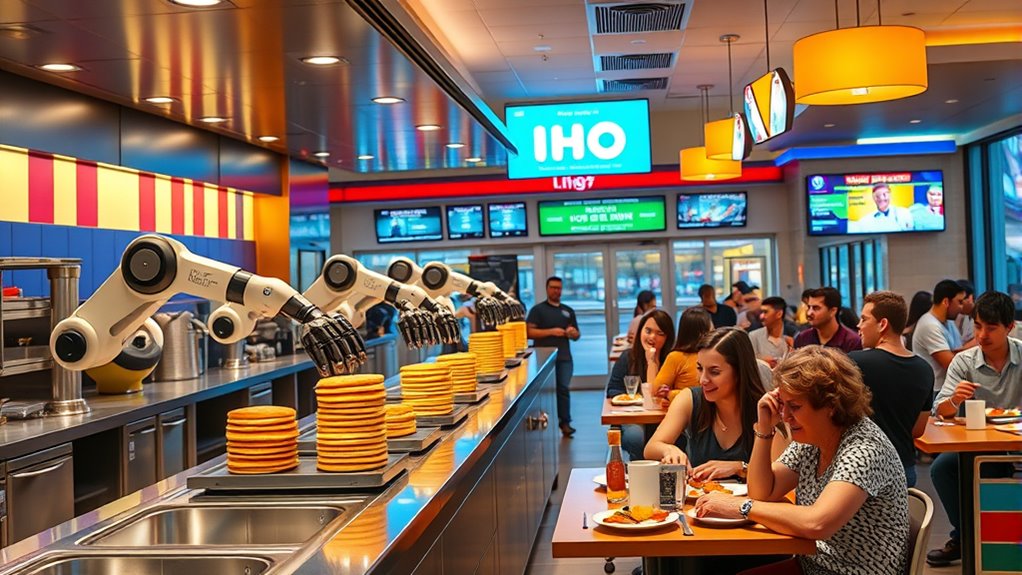

Applebee’s and IHOP are using AI to make your dining experience faster and smoother. AI-powered kiosks let you customize orders and pay quickly, while smart systems predict busy hours to help staff get ready. Kitchen management tools ensure your pancakes are served promptly. These innovations improve service speed and personalization, so you get more tasty meals without the wait. Keep exploring to discover how these tech upgrades could transform your next visit.

Get business pricing on tech for your team
- Business-only prices and quantity discounts
- Tax-exempt purchasing
- Multiple users, one account, clear invoices
Key Takeaways
- Applebee’s and IHOP are implementing AI-powered digital kiosks to streamline ordering and reduce wait times.
- AI systems analyze sales data to predict demand, optimizing kitchen operations and inventory management.
- Personalized AI recommendations enhance customer engagement with tailored menu suggestions and promotions.
- AI tools assist staff with order management, allowing more focus on providing attentive, personalized service.
- The integration of AI aims to increase efficiency, serve more customers faster, and improve overall dining experiences.
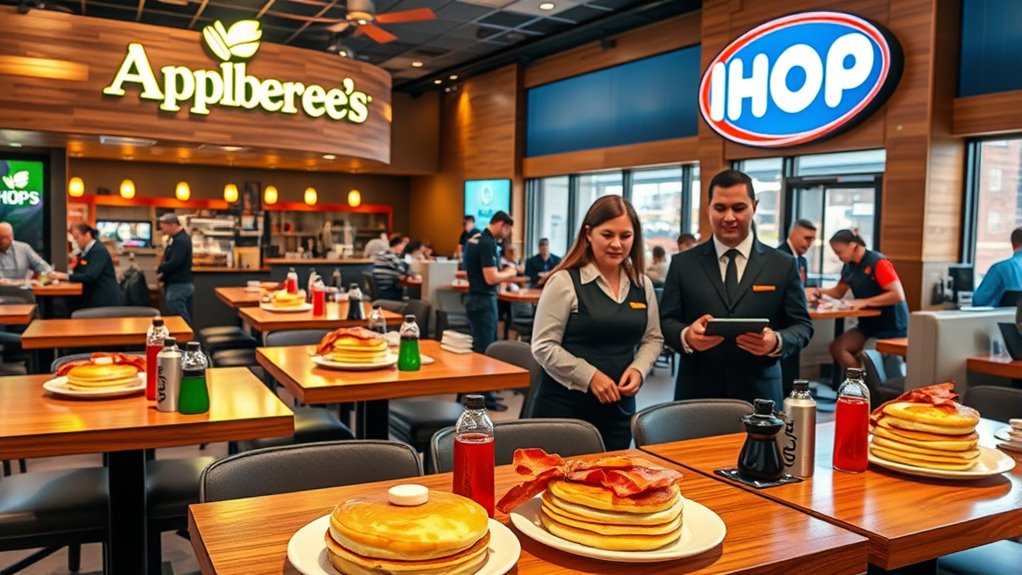
In a move to improve efficiency and serve more customers faster, Applebee’s and IHOP are turning to artificial intelligence. This AI implementation is designed to streamline operations, reduce wait times, and enhance your overall customer experience. By integrating smart technology into their workflows, these restaurants aim to deliver quicker service without sacrificing quality.
Applebee’s and IHOP are using AI to serve you faster and improve your dining experience.
When you walk into either restaurant, you might notice new AI-powered systems assisting staff and managing orders. For example, digital ordering kiosks are now more intuitive, reducing errors and speeding up the process. Instead of waiting for a server to take your order, you can quickly customize your meal and pay right at the kiosk. This not only saves you time but also allows staff to focus more on delivering personalized service where it’s needed most.
The AI implementation extends beyond ordering. It helps the kitchen staff anticipate demand, optimize food prep, and manage inventory more efficiently. By analyzing sales data and predicting peak hours, the system can suggest staffing adjustments or menu tweaks, ensuring you get your favorite dishes promptly. As a result, wait times decrease, and the overall dining experience becomes smoother and more reliable.
Customer experience is at the core of this technological shift. The AI tools enable restaurants to personalize interactions, whether through targeted promotions or tailored menu recommendations based on your preferences. For instance, if you often order breakfast items at IHOP, the system might suggest your preferred dishes or special deals when you visit. This personal touch makes your visit feel more customized and engaging.
Moreover, AI helps improve communication between customers and staff. Chatbots or virtual assistants can answer common questions, provide real-time updates on wait times, or help with reservations. This means you get quicker responses, and staff can concentrate on delivering attentive service rather than handling routine inquiries. The goal is to create a seamless, frictionless experience that keeps you coming back.
Additionally, the integration of AI in these restaurants can adapt and improve over time, becoming more efficient and better at predicting customer needs, similar to how ECU remapping can optimize vehicle performance through data analysis. The AI implementation at Applebee’s and IHOP isn’t about replacing human staff but empowering them. By automating repetitive tasks and providing data-driven insights, your dining experience becomes faster, more accurate, and more enjoyable. You’ll notice shorter waits, personalized service, and a more efficient overall visit. As these chains continue to innovate, you can expect your favorite comfort foods to arrive even faster, all while feeling valued and well-cared-for. The future of dining is here, and it’s smarter, quicker, and more customer-centered than ever before.
digital ordering kiosk for restaurants
As an affiliate, we earn on qualifying purchases.
As an affiliate, we earn on qualifying purchases.
Frequently Asked Questions
How Does AI Personalize Menu Recommendations for Customers?
You get personalized menu recommendations through AI by analyzing your past orders, preferences, and dietary restrictions. This enhances order accuracy and helps the system suggest items you’ll enjoy. As a result, you receive tailored marketing messages and menu options that match your taste, making your experience smoother. AI’s ability to adapt to your preferences guarantees you’re more likely to find something you love, increasing satisfaction and efficiency during your visit.
What Measures Ensure Data Privacy With AI Implementation?
You safeguard your data like a treasured secret garden, making certain privacy concerns don’t bloom into issues. To protect data security, you implement encryption, access controls, and regular audits, creating an unbreakable fortress around sensitive information. These measures keep your data safe from prying eyes, giving you peace of mind as AI enhances service. Staying vigilant and proactive ensures your privacy remains protected amid technological growth.
How Do Staff Adapt to New Ai-Driven Workflows?
You adapt to new AI-driven workflows by participating in staff training sessions that focus on understanding the technology and its role in daily tasks. Embrace workflow integration by practicing with AI tools and providing feedback to improve processes. Stay open to learning, ask questions, and collaborate with colleagues to smoothly incorporate AI into your routines, ensuring efficient service and a seamless shift to the new system.
Will AI Replace Human Servers and Cooks?
You might picture AI as a helpful assistant, not a replacement. It streamlines operations, enhancing customer experience by reducing wait times and ensuring orders are accurate. In restaurant innovation, AI supports human servers and cooks, allowing them to focus on creating warm, memorable moments. AI won’t replace your favorite staff; instead, it acts as a tool to boost efficiency, making dining more enjoyable for everyone.
What Are the Long-Term Cost Savings From AI Integration?
You’ll see long-term cost savings through AI integration by reducing labor expenses and minimizing errors. AI boosts operational efficiency, allowing staff to focus on customer service instead of repetitive tasks. Over time, these improvements lead to lower operational costs and increased profitability. The initial investment in AI pays off as it streamlines processes, enhances accuracy, and helps you deliver faster service, ultimately driving growth and competitiveness.
AI-powered restaurant management system
As an affiliate, we earn on qualifying purchases.
As an affiliate, we earn on qualifying purchases.
Conclusion
As you watch these giants embrace AI, you can’t help but wonder what’s next for your favorite dining spots. Will this innovation truly transform your experience or just reshape the way they serve? The future of dining is unfolding now, and it’s more unpredictable than ever. Stay tuned—what happens next might change the way you think about your next pancake breakfast forever. The real question is, are you ready for what’s coming?
self-service restaurant ordering machine
As an affiliate, we earn on qualifying purchases.
As an affiliate, we earn on qualifying purchases.
restaurant demand prediction software
As an affiliate, we earn on qualifying purchases.
As an affiliate, we earn on qualifying purchases.
Halloween Picks
halloween
As an affiliate, we earn on qualifying purchases.