
TL;DR

Get tech for your team delivered free — and shop member deals
- Fast, free delivery on millions of items
- Access to Prime Big Deal Days deals on October 6–7
- Prime Video, Amazon Music and more included
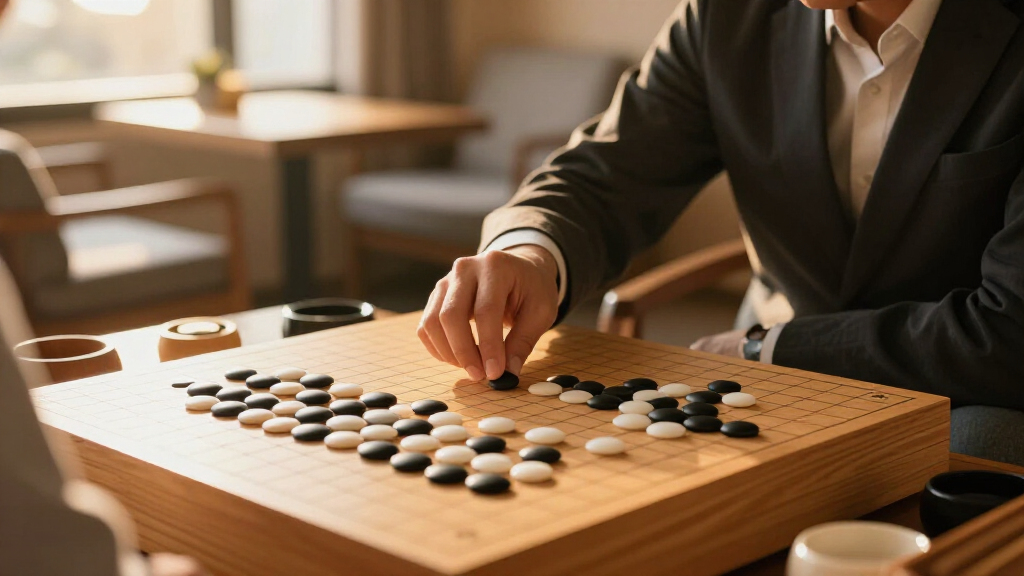
Go grandmaster Shin has defeated the AI KataGo in a match with a two-stone handicap. This is a rare instance of a top human player beating an advanced AI under handicap conditions, highlighting ongoing progress and challenges in AI-human Go play.
Go grandmaster Shin has defeated the AI KataGo in a match with a two-stone handicap, a rare achievement that underscores the evolving capabilities of human players against AI systems. The match, held on March 2026, has attracted widespread attention within the Go community and AI research circles, as it challenges assumptions about AI dominance in the game.
The match was conducted under standard tournament conditions, with Shin starting with a two-stone handicap against the AI KataGo, which is widely regarded as one of the strongest AI Go programs. According to sources close to the event, Shin secured victory after a tense and strategic game that lasted several hours.
While AI systems like KataGo have demonstrated superhuman performance in unrestricted play, this result indicates that top human players can still challenge and sometimes overcome AI with strategic handicaps. The match was broadcast live and has since generated significant discussion among AI researchers and professional players about the limits and potential of AI in complex strategic games.
Implications for AI-Human Go Competitions
This victory signifies that even the most advanced AI systems are not invincible when facing skilled human players under handicapped conditions. It raises questions about the true capabilities of AI in strategic reasoning and adaptability, especially in scenarios where humans are given a strategic advantage. For the broader AI community, the result suggests that human intuition and strategic flexibility remain relevant and can sometimes outperform AI in specific contexts.
For the Go community, this match rekindles debates about the role of AI in training, strategy development, and competitive play. It also provides a benchmark for future AI improvements and human-AI interaction models.
As an affiliate, we earn on qualifying purchases.
Recent Trends in AI and Human Go Competitions
Over the past few years, AI systems like AlphaGo, Leela Zero, and KataGo have achieved superhuman performance in Go, often defeating top-ranked human players without handicaps. These victories have been viewed as milestones in AI development, with AI now considered a dominant force in the game.
The current match, however, marks a notable departure from this trend, as a human player managed to secure a win against an AI with a handicap. This development has sparked renewed interest in the potential for humans to challenge AI under specific conditions, especially as AI systems continue to evolve and adapt.
Search interest in AI-human Go matches surged in early 2026, driven by the ongoing debate about AI’s limits and the strategic depth of human play. The trigger for this spike remains unconfirmed, but the Shin victory appears to be a key event fueling this curiosity.
As an affiliate, we earn on qualifying purchases.
Unconfirmed Aspects of the Match and Its Impact
Details about the specific strategies used by Shin, the exact conditions of the match, and whether this outcome will influence future AI development are still emerging. It is not yet clear if this victory represents a broader trend or a unique event.
Additionally, the long-term implications for AI dominance in Go remain uncertain, as experts debate whether this result signifies a limit or a new phase of AI-human interaction.
As an affiliate, we earn on qualifying purchases.
Future Matches and AI Development Milestones
Following Shin’s victory, discussions are expected to intensify around AI adaptability and human strategic innovation. Future matches may explore different handicap settings or involve other top players to assess AI robustness.
Researchers and developers are likely to analyze this game in detail to understand the factors behind Shin’s success and whether similar results can be replicated or improved upon in upcoming competitions.
Moreover, the AI community may refine algorithms to counter such strategic handicaps, aiming to maintain AI’s competitive edge or explore new training paradigms.
Go strategy books for advanced players
As an affiliate, we earn on qualifying purchases.
As an affiliate, we earn on qualifying purchases.
Key Questions
How significant is Shin’s victory over KataGo?
Shin’s victory is considered a notable milestone, as it challenges the notion of AI invincibility in Go, especially under handicap conditions. It highlights the ongoing relevance of human strategic thinking.
What does a two-stone handicap mean in Go?
A two-stone handicap means the human player starts the game with two stones already placed on the board, giving them a strategic advantage over the AI in terms of position and potential for influence.
Will this affect how AI systems are used in Go training?
Potentially. This result may encourage more research into how humans can challenge AI and how AI can better adapt to different playing conditions, influencing future training methods and competitive formats.
Is this the first time a human has beaten an AI with a handicap?
While there have been other instances of humans challenging AI with handicaps, Shin’s victory is notable for the strength of the player and the AI involved. It marks a rare and significant achievement in AI-human Go matches.
What are the next steps for AI developers after this match?
Developers are likely to analyze the game in detail, refine algorithms to address strategic weaknesses revealed, and possibly design new AI training scenarios to prevent similar surprises in future competitions.
Source: hn
Halloween Picks
halloween
As an affiliate, we earn on qualifying purchases.